Business Hours:
Monday – Friday: 8:00 AM – 12:00 PM, 1:30 PM – 5:30 PM
Hit enter to search or ESC to close
Monday – Friday: 8:00 AM – 12:00 PM, 1:30 PM – 5:30 PM
June 13 2026
In any industrial environment where hazardous chemicals, dust, or foreign particles are present, immediate ocular decontamination is not just a luxury—it is a critical safety requirement. A gravity eye wash station provides a reliable, non-plumbed solution for emergency flushing, ensuring that workers have access to clean water within seconds of an accident. Unlike complex plumbing systems, gravity-fed units are easy to install and maintain, making them ideal for remote locations or temporary workstations. This guide will explore everything you need to know about selecting and maintaining these essential safety devices.

The fundamental principle behind a gravity eye wash station is simplicity. These stations consist of a reservoir tank mounted at a height that allows gravity to push water through a valve and out of the spray heads. When the actuator is pushed, two gentle streams of water are directed into the eyes, flushing out contaminants without causing further trauma to the ocular tissue. Because they do not require a direct connection to a water line, they eliminate the risk of pipe bursts or water pressure fluctuations, providing a consistent flow rate that is essential for effective decontamination.
Quick Fact: To meet ANSI Z358.1 standards, emergency eye washes must provide a continuous flow of water for at least 15 minutes. Gravity stations are designed specifically to hold enough volume to satisfy this critical time window.
Many facility managers prefer the gravity eye wash station over plumbed versions due to its versatility. First, installation is incredibly fast; there is no need to hire a plumber or tear up floors to run pipes. Second, these units can be moved as the layout of the workspace changes, ensuring that safety equipment is always within the "10-second reach" rule. Finally, the cost of ownership is significantly lower, as there are no expensive installation fees or complex piping maintenance tasks. This makes it a cost-effective way to achieve high safety standards in small shops or large warehouses alike.
Not all eye wash stations are created equal. Depending on your specific environment, you may need a portable unit or a wall-mounted heavy-duty station. The following table compares the common specifications you will encounter when browsing for a gravity eye wash station to help you make an informed decision.
Proper installation of a gravity eye wash station is key to its effectiveness. The unit should be mounted at a height where the spray heads are comfortably aligned with the eyes of the average user. It must be located in a highly visible area, marked with standard safety signage. Maintenance is equally important; because the water sits in a tank, it can become stagnant. Regular flushing (weekly or monthly) is recommended to prevent bacterial growth. Using preservative additives or replacing the water frequently ensures that the fluid remains sterile and safe for ocular use.

The adaptability of the gravity eye wash station makes it an essential tool across various sectors. In chemical laboratories, they provide an immediate response to acid or base splashes. In agricultural settings, they are perfect for rinsing out pesticides or fertilizers in the field where plumbing is unavailable. Manufacturing plants utilize them near grinding or sanding stations to remove metal shards or dust. By placing these stations strategically, companies not only comply with OSHA and ANSI regulations but also significantly reduce the severity of workplace injuries.
To maximize the utility of your gravity eye wash station, follow these industry best practices. First, ensure the path to the station is always clear of obstructions. Second, conduct monthly training drills so that employees can locate and operate the station instinctively under stress. Third, keep a logbook of water changes and inspections to prove compliance during safety audits. Finally, always check that the water temperature is "tepid"—neither too hot nor too cold—to avoid causing thermal shock to the eyes during an emergency.
Investing in a high-quality gravity eye wash station is one of the most effective ways to protect your workforce from permanent vision loss. Its ease of installation, reliability, and low maintenance make it a superior choice for diverse industrial applications. By integrating these stations into your safety protocol and maintaining them diligently, you create a safer, more compliant workplace. Don't wait for an accident to happen—ensure your team has the protection they deserve today.
It is generally recommended to change the water in a gravity eye wash station every 1 to 2 weeks, or more frequently if the environment is particularly dusty or hot. Stagnant water can become a breeding ground for bacteria and algae, which could cause an infection if flushed into an already injured eye. Some facilities use specialized preservative solutions to extend the life of the water, but regular manual replacement remains the gold standard for safety and hygiene.
You should only use potable (drinking) water or sterile saline solution. Using non-potable water or water from an untreated source can introduce harmful pathogens into the eye. If you are in a location where potable water is scarce, we recommend using distilled water or pre-packaged sterile saline bags. Always ensure the water is at a tepid temperature to avoid causing further shock or irritation to the ocular membranes.
Yes, as long as the unit is designed to provide the required flow rate and volume for a full 15 minutes of continuous flushing. Many professional-grade gravity eye wash stations are explicitly engineered to meet ANSI Z358.1 specifications. However, compliance also depends on the placement of the unit; it must be accessible within 10 seconds of the hazard area to be fully compliant with safety regulations.
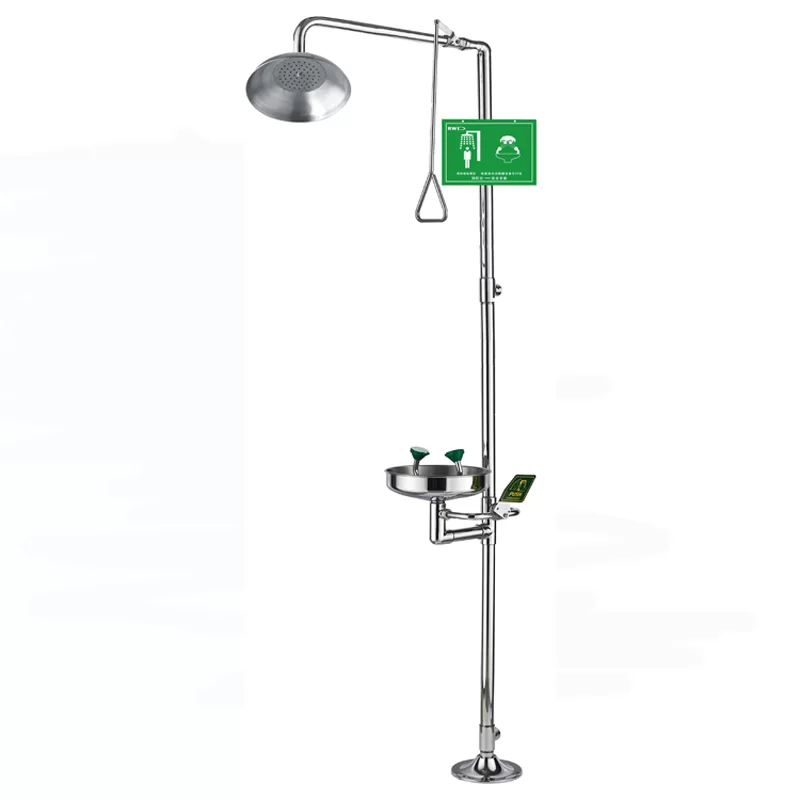
The main difference is the water source. A plumbed station is connected directly to the building's water supply, providing an infinite supply of water but requiring expensive piping and plumbing installation. A gravity station uses a reservoir tank, meaning it is "standalone." This makes it significantly easier to install and allows it to be placed in areas where plumbing is impossible. While gravity stations have a finite amount of water, they are designed to hold enough to complete the necessary 15-minute flush required for most chemical emergencies.