Business Hours:
Monday – Friday: 8:00 AM – 12:00 PM, 1:30 PM – 5:30 PM
Hit enter to search or ESC to close
Monday – Friday: 8:00 AM – 12:00 PM, 1:30 PM – 5:30 PM
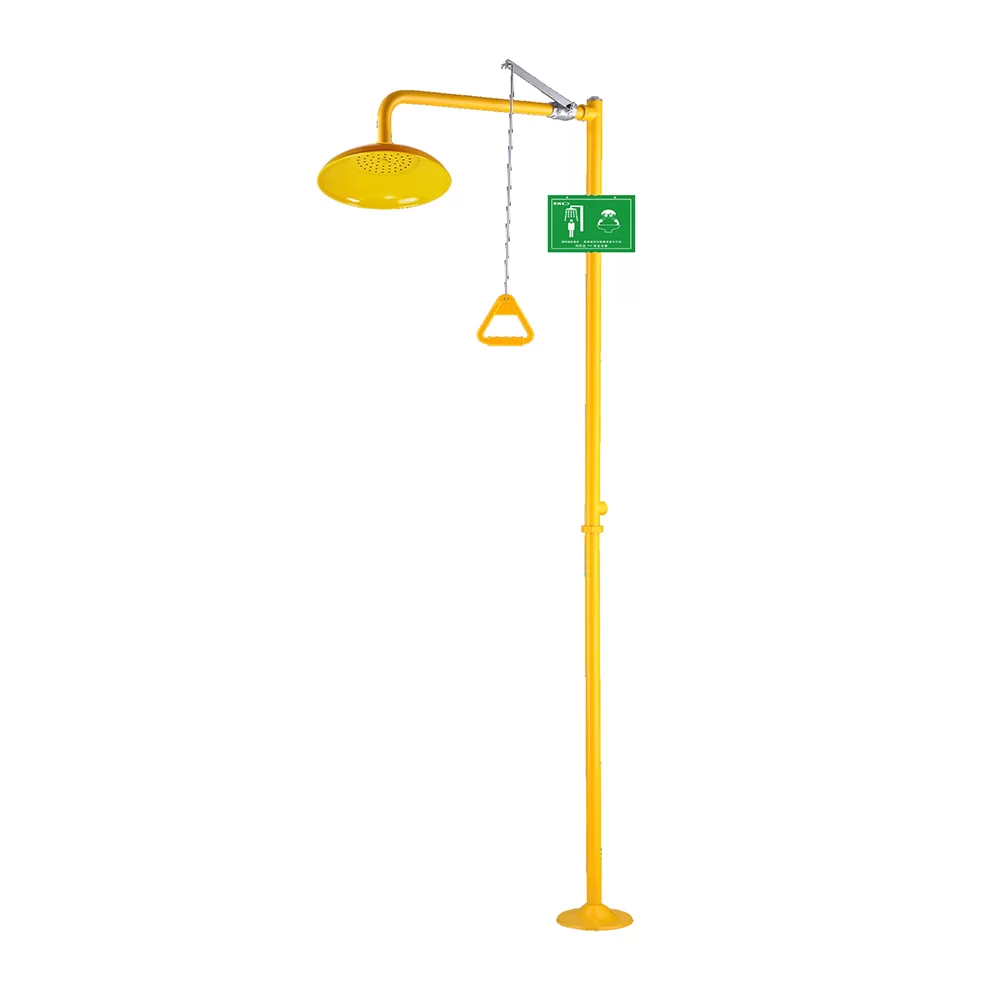
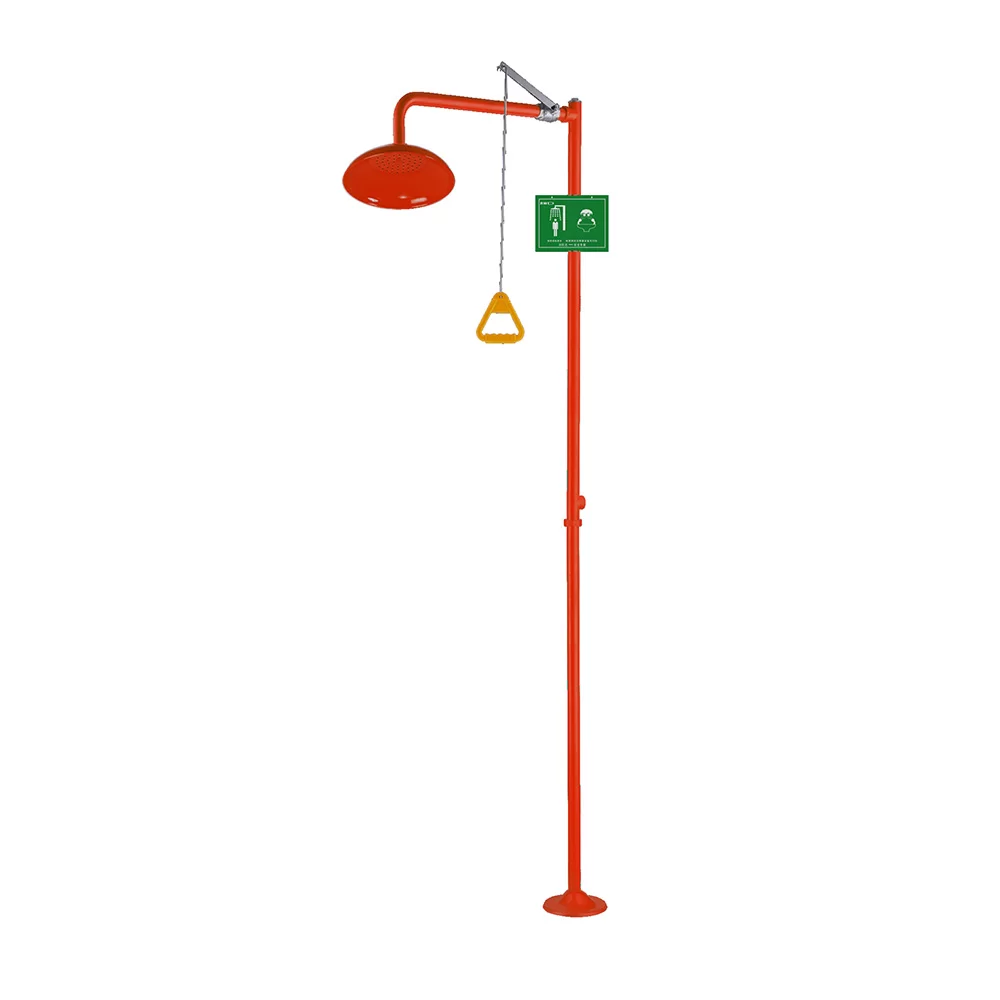
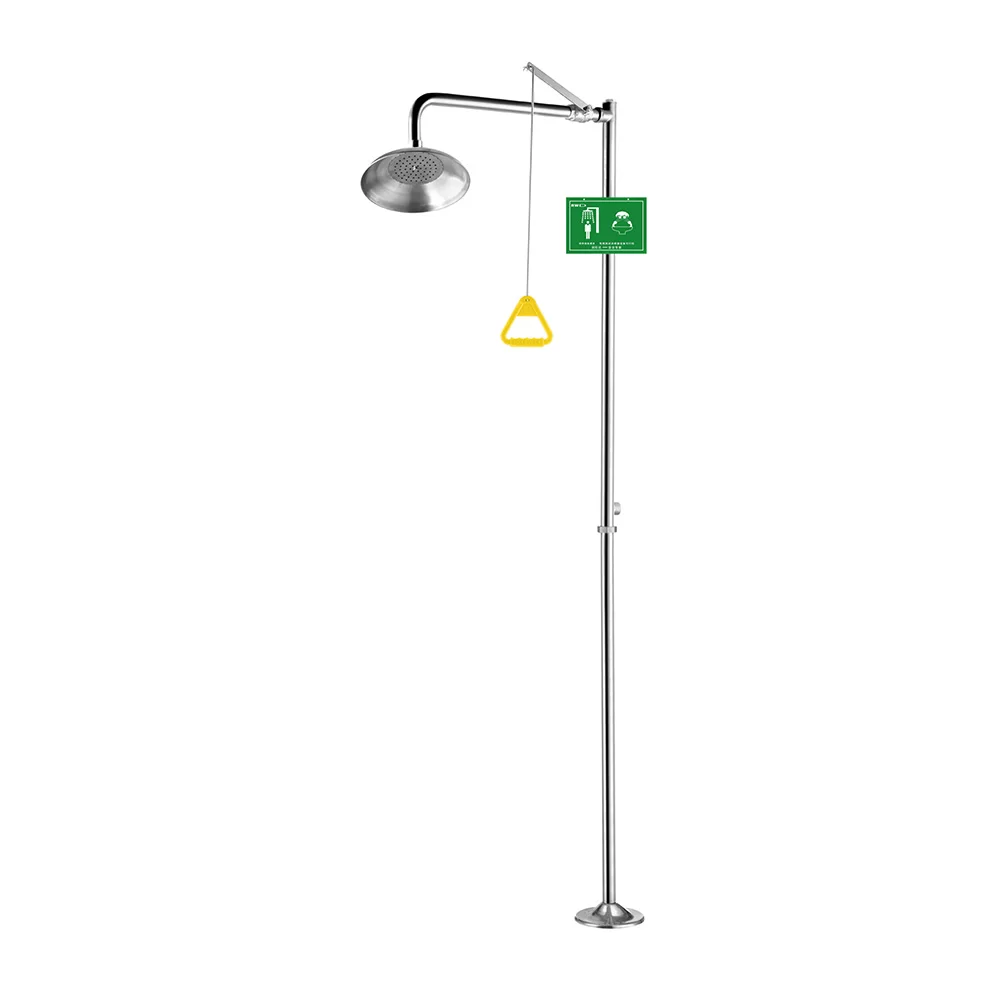
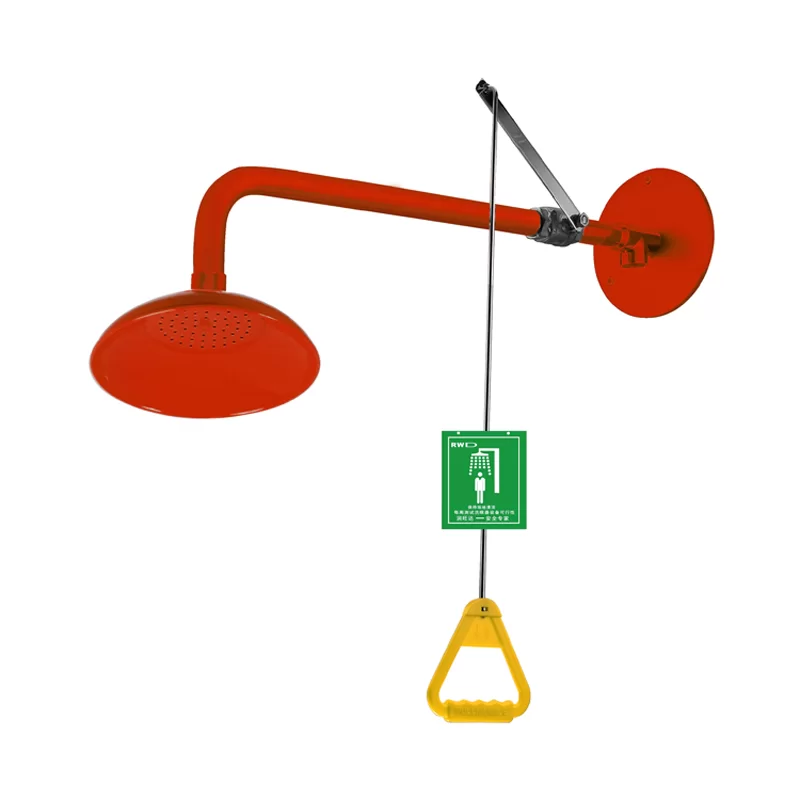
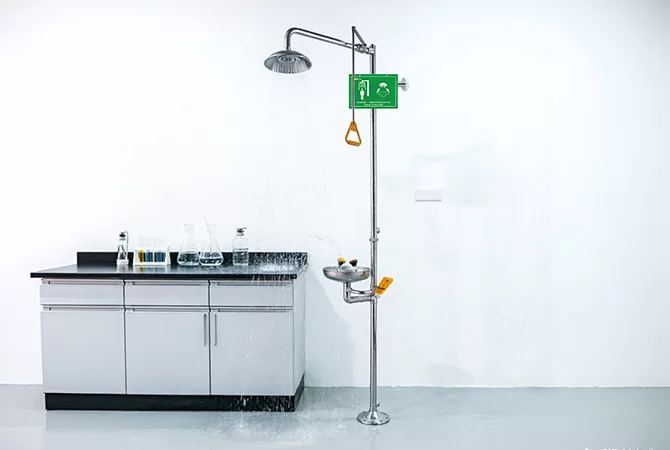
Floor mounted emergency shower is essential in environments such as laboratories, factories, and chemical plants where workers may be exposed to hazardous chemicals. They provide immediate decontamination by flushing chemicals off the body, reducing the risk of burns, irritation, or long-term injury, and help control accidents by preventing chemical spread or escalation of harm. They are often used in combination with eyewash stations to ensure comprehensive protection.
Description
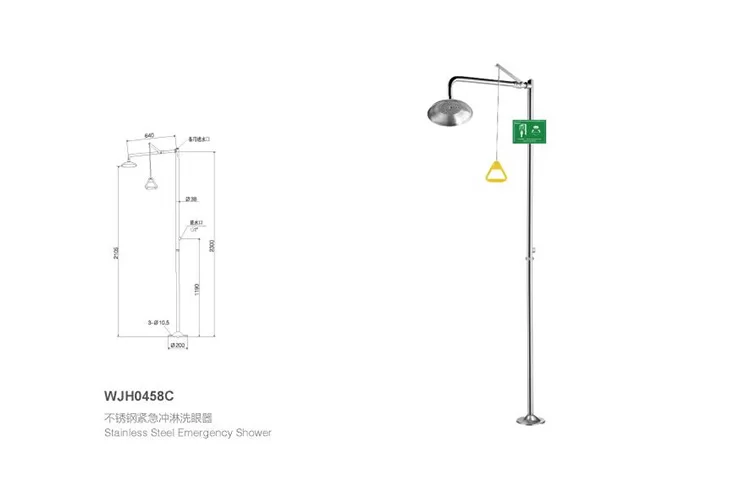
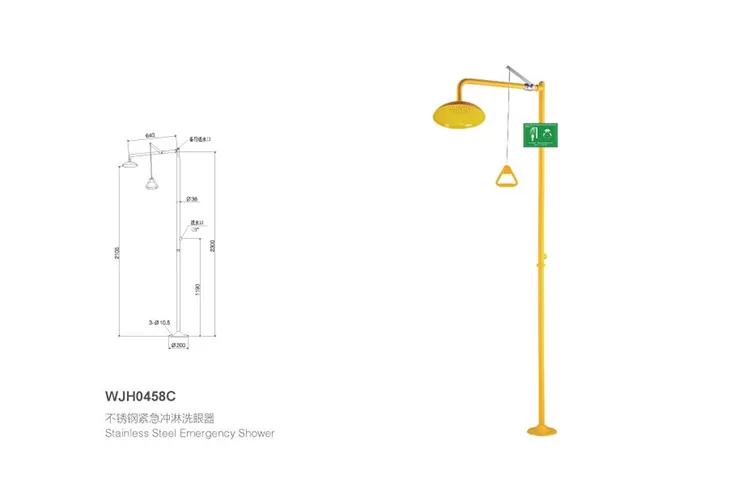
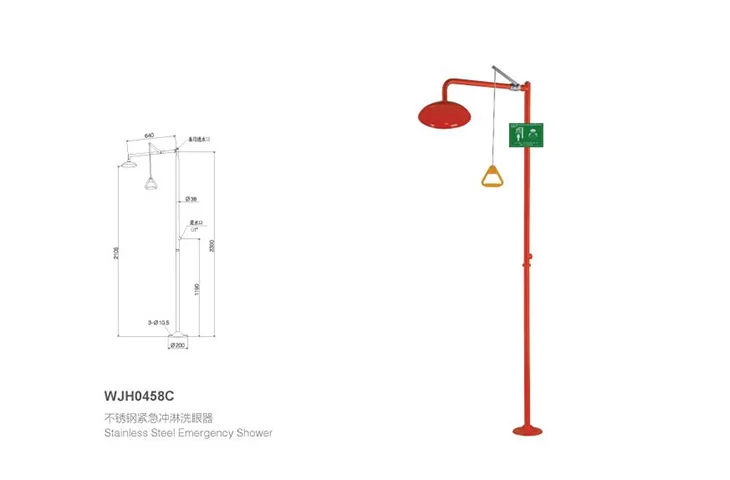
Product Specification
Material: Stainless Steel 304
Surface finishing: Polished or glossy epoxy coated
Usage: shower ( optional hand-held eye wash )
Shower & eye wash switch: two-piece ball valve
Shower head: spinning-formed with curled rim, diameter 250 mm
Pipe diameter: 38 mm
Nominal pressure: 1.0 MPa
Working pressure: 0.2~0.4 MPa
Testing pressure: 1.5 MPa
Temperature requirement on working environment: 0°C~40°C
Flow rate of body shower: ≥76 L/min
Inlet thread: G 1"
Inlet height ( from above the floor ): 1190 mm
Water pattern coverage: at the height of 1520 mm above floor, the water pattern covers ,a circular area of at least 510 mm in diameter
Product Installation
Installation:Floor mounted emergency shower should be installed in a highly visible location with easy access from at lease three directions, the position should be reachable within 10 seconds of any hazardous area. The general area should be kept clear at all times with clear access and no obstructions which could hinder access if vision is impaired. Suitable flooring should be considered to prevent a slip hazard along with suitable drainage or a procedure to deal with spillage. The valve and flow should remain open until manually turned off. It should be also ensured that the water supply cannot be turned off or interrupted in the supply pipework.
Product Maintenance
1. Regular Startup Checks
Activate the emergency flushing device at least once a week to check the filter for impurities, rust, or blockage, and ensure the water outlet is functioning properly.
2. Monthly Maintenance
Conduct comprehensive inspection and maintenance of the device every month to find and eliminate potential faults in time to ensure that the equipment is in good working condition.
3. Annual Testing
A comprehensive annual inspection is conducted annually to evaluate the overall performance and safety of the equipment to ensure that the emergency shower equipment can be used normally.
4. Inspection Record Management
After each inspection and maintenance, be sure to fill in the relevant records on the registration card, which needs to be placed near the emergency flushing device for easy access and management at any time.